
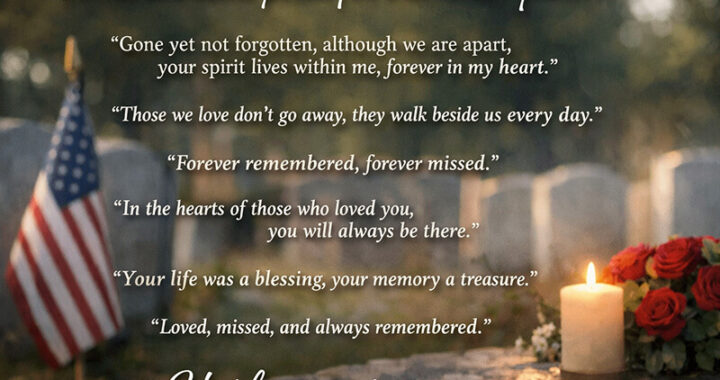
What Are Some Powerful Memorial Quotes?
Table of Contents
Words can comfort, heal, and preserve memories of important events. After you have lost someone very dear to you, it is almost an overwhelming task to put into words a memorial for them. According to the National Funeral Directors Association (NFDA), around 2.8 million Americans die each year, with many families having difficulty expressing their feelings during such times. Memorial quotes can serve as a meaningful way to express mourning and remembrance, offering solace and healing when words fail.
Classic Memorial Quotes for Loved Ones
Classic quotes have a timeless nature because they address some general truths about loss and love. The American Psychological Association (APA) has shown that meaningful words express the unspeakable and that, in the act of doing so, they help to sustain the grieving process.
Perhaps one of the most time-honored quotations is: “Those we love don’t go away, they walk beside us every day.” — Author unknown This thought strikes a chord since it acknowledges continuing bonds, a field of study among grief researchers. For example, bereavement study expert Dr. Dennis Klass has established that it is healthy and natural to maintain links with those who have died.
Yet another moving classic is Helen Keller’s: “What we have once enjoyed we can never lose. All that we love deeply becomes a part of us.” Studies conducted by the Association for Death Education and Counseling (ADEC) have shown that memories do provide everlasting comfort and help in integrating loss into one’s life story.
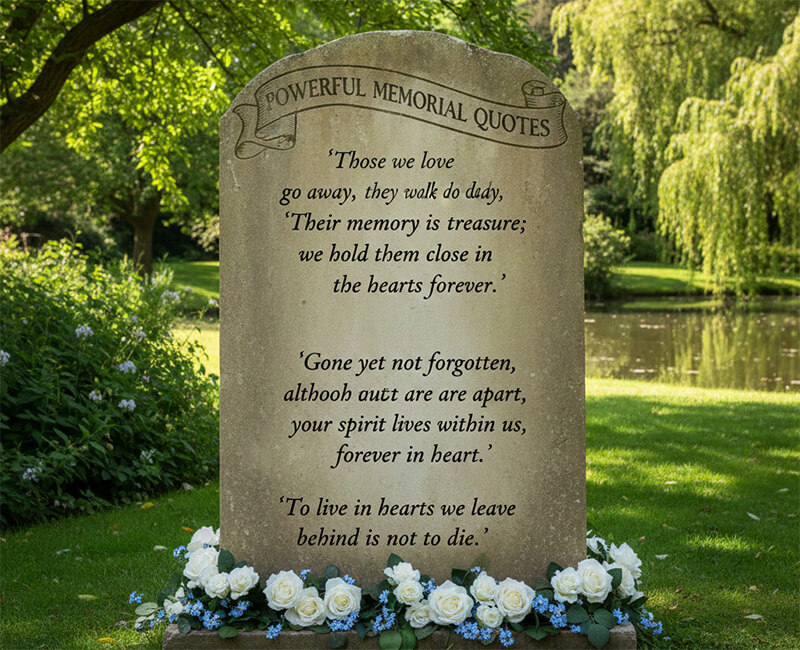
💡 Did You Know? The International Cemetery, Cremation, and Funeral Association (ICCFA) estimates that over 85% of families choose to personalize memorials with the assistance of quotes, poems, or meaningful phrases that reflect their loved one’s life and values.
For parents who’ve lost children, the quote, “An angel in the book of life wrote down my baby’s birth, then whispered as she closed the book, ‘too beautiful for earth,'” extends tender recognition of their grief. The Compassionate Friends (TCF), an organization that assists parents who have lost children, states that these expressions honor the depth of grief associated with the loss of a child.
Religious and Spiritual Memorial Quotes
Faith affords millions consolation when mourning. According to the Pew Research Center (PRC), 72% of Americans believe in heaven, which is almost a statement of hope for reunion and peace, something religious quotes almost always express.
From the Christian tradition, Psalm 23:4 reassures: “Even though I walk through the darkest valley, I will fear no evil, for you are with me.” This scriptural quote has been used in memorials in recognition of both suffering and divine presence. The National Association of Catholic Chaplains (NACC) states that when grief feels chaotic, scripture gives it structure.
In the Islamic tradition, it is stated: “To Allah we belong and to Him we shall return” (Quran 2:156). This phrase, Inna Lillahi wa Inna Ilayhi Raji’un, reminds the faithful of the temporary nature of life while affirming faith. The Islamic Society of North America (ISNA) states that such quotes place mourners in a grounded spiritual frame of reference.
Buddhist wisdom teaches: “Do not stand at my grave and weep, I am not there, I do not sleep.” It also relates to beliefs about consciousness and impermanence. The Mind & Life Institute (MLI) shows that a Buddhist approach to death can relieve anxiety and increase acceptance.
Quotes About Grief and Healing
Recognizing the emotional pain in which grief resides is very important. The Center for Complicated Grief (CCG) at Columbia University observes that normalizing the situation of grieving into the shared space of the language helps in preventing isolation and complicated forms of grief disorders.
Author Jamie Anderson comments, “Grief, I have learned, is really just love. It’s all the love you want to give but cannot. All that unexpressed love gathers up in the corners of your eyes, the lump in your throat and in that hollow part of your chest. Grief is just love with no place to go.” By reframing grief as love, the meaning of grief has been shared millions of times on social media, thus helping people to view their pain differently.
Elisabeth Kübler-Ross, the main researcher in death and dying due to her work with terminally ill patients, has said: “The reality is that you will grieve forever. You will not ‘get over’ the loss of a loved one; you will learn to live with it.” KRF now teaches people that grief is not a problem to be solved, but rather a process to be integrated.
A quote by writer Washington Irving provides perspective: “There is a sacredness in tears. They are not the mark of weakness but of power. They speak more eloquently than ten thousand tongues.” The American Academy of Ophthalmology (AAO) has published evidence that tears of emotion carry stress hormones, thus confirming crying as a healing mechanism.
Modern Memorial Quotes
Contemporary voices speak with fresh perspectives on old themes. Social media has democratized the memorial process, with sites such as Facebook and Instagram becoming modern spaces for memorializing. The Online Grief Support Community (OGSC) states that digital memorials reach a wider audience and create more enduring tributes.
Author Mitch Albom, in “The Five People You Meet in Heaven,” states: “Death ends a life, not a relationship.” This distinction allowed millions to understand that bonds continue in absence. This book sold over 14 million copies and is testimony to its immense resonance.
Lin-Manuel Miranda, creator of Hamilton, spoke out after the death of his grandfather, saying, “No one else will ever know the strength of my love for you. After all, you’re the only one who knows what my heart sounds like from the inside.” This very private view encapsulates the uniqueness of every relationship.
Poet Mary Elizabeth Frye’s poem has spread far and wide: “You can shed tears that she is gone, or you can smile because she has lived.” This choice-centered approach empowers the bereaved to honor the memory with celebration and not just sadness.
Choosing the Right Quote
It is a highly personal affair to choose a memorial saying. The Monument Builders of North America (MBNA) suggest that families should really look into the personality, religion, and worldview of the deceased while considering the memorial sayings. A sincere quote would express authenticity for both the person and the relationship.
Here are some factors to consider when selecting a quote:
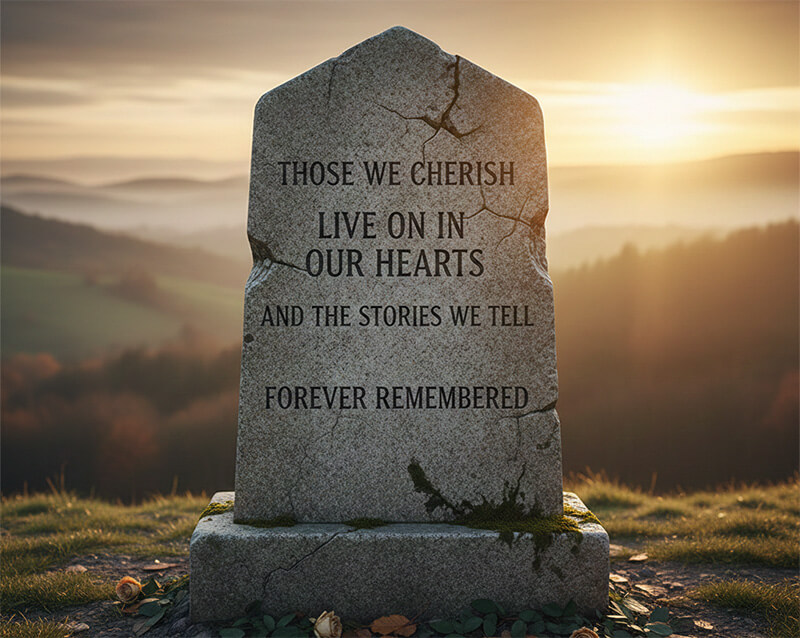
Size and positioning: Most headstones can fit somewhere between 15-25 words. The International Memorial Products Association (IMPA) proposes that, to maximize impact, such quotes ought to be brief.
Culture and Traditions: A quote should suit the culture of the family. NAVA adds that veteran memorials commonly include sayings relevant to the military.
Timelessness: Such words should be potent decades down the road. According to cemetery records obtained from the National Cemetery Administration (NCA), basic, tasteful quotes tend to stay the longest.
Past Connections: The most moving quotes often derive from the deceased’s cherished books, songs, or even their personal expressions. As the Funeral Consumers Alliance (FCA) points out, when something is personalized, it becomes much more meaningful to the visitors of the memorial.
Conclusion
Done right, memorial quotes are testimonials to past lives and love shared. From ancient wisdom to near-modern expression, the right words heal the grieving while celebrating the dead. Research published by the Association for Death Education and Counseling confirms memorial practices that carry meaning facilitate healthy grieving processes. When it comes to selecting words for the deceased, bear in mind that the best quotes resonate with the uniqueness of the departed and the irreplaceable bond shared. An inscription, therefore, becomes not merely a stone carving, but a conversation with memory and love through eternity.