
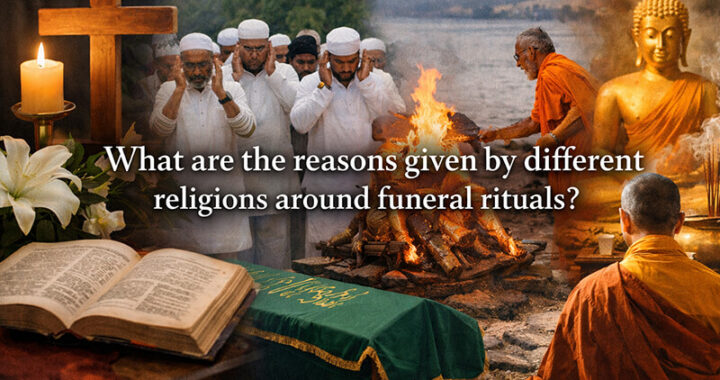
What Are the Reasons Given by Different Religions Around Funeral Rituals?
Understanding Sacred Traditions and Their Deeper Meanings
📖 Article Outline
- Introduction: The Universal Language of Farewell
- Christianity: Honoring the Journey to Eternal Life
- Islam: Returning to Allah with Purity
- Hinduism: Liberation Through Fire and Water
- Buddhism: Facilitating the Path to Rebirth
- Conclusion: Common Threads in Sacred Farewells
Introduction: The Universal Language of Farewell
Death is without a doubt one of the few truly universal experiences that all human beings encounter. However, the way in which people deal with it can be very different depending on cultural and religious factors. Funeral rites act not only as ceremonies but also as deep manifestations of faith, affection, and our understanding of what may await us after death. Every culture brings its own unique reasons for carrying out these hallowed rites, ranging from the somber Catholic mass to the lively Hindu cremation.
According to anthropological findings, about 95% of human societies throughout history have practiced funeral ceremonies of some kind. Apart from satisfying psychological and spiritual needs, these rituals also serve as social functions, providing the bereaved with a means of coping with their loss while paying tribute to the deceased.
Christianity: Honoring the Journey to Eternal Life
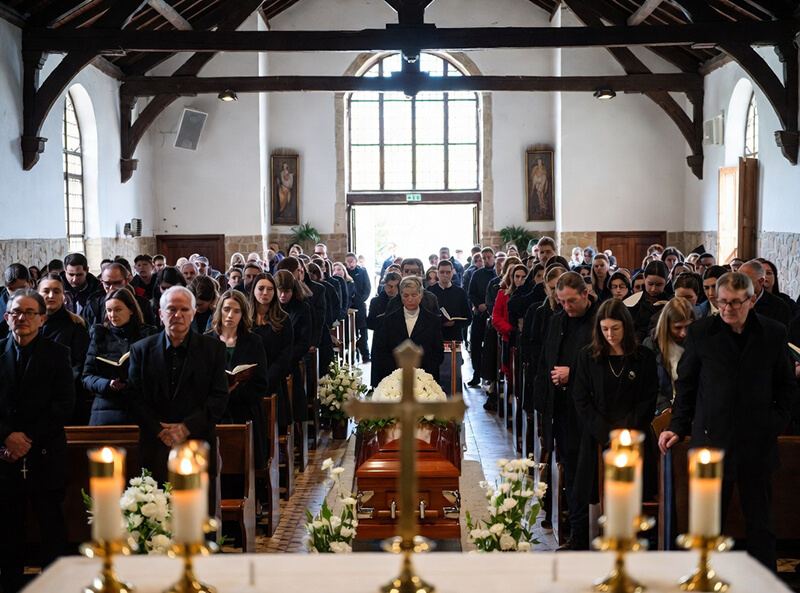
Christian funeral ceremonies revolve around the concept of resurrection and everlasting life through the intervention of Jesus Christ. Besides soothing the bereaved, the rites also play a role in reinforcing the faith of the participants.
In Christianity, funerals are sometimes referred to as a “COL” (Celebration of Life) or “homegoing,” especially in denominations that stress the idea that death is merely a physical separation and not a permanent loss. The Roman Catholic Church (RCC) goes a step further by explaining that funeral ceremonies are a way to entrust the deceased to the loving care of God while simultaneously giving comfort and hope to those left behind.
Example: In the case of my neighbor Mrs. Patterson who was a faithful Methodist and died last year, her family chose to include in the funeral service several hymns that were dear to her. The minister made the point that singing “Amazing Grace” was more than a ritual, it was a declaration of faith in the Christian doctrine that God’s grace is available even after death. By gathering together, the members of the church formed a strong bond that served as a great support to the bereaved family in their time of grief.
The wake is an opportunity for relatives and acquaintances to pay one last homage to the deceased, whose body is, according to Christian teachings, a temple of the Holy Spirit. As per a research carried out in 2019 by PRC (Pew Research Center), 78% of the Christian families in the U.S. still go for the conventional burial as opposed to cremation. During the committal service, the familiar phrase “ashes to ashes, dust to dust” is used, which on one hand, acknowledges the earthly origin of man and on the other hand, points towards the hope of resurrection of the body.
Islam: Returning to Allah with Purity
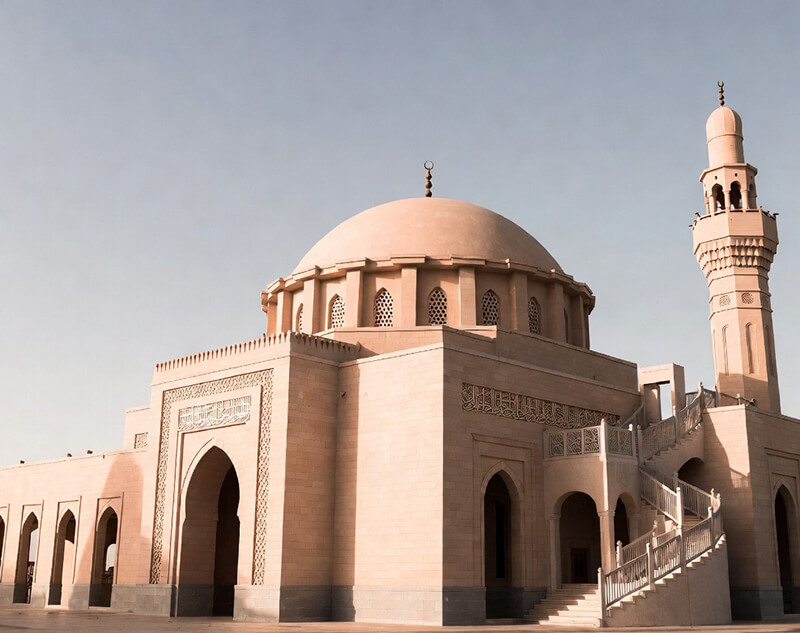
Muslim funeral rites are based on the teachings of the Quran and the traditions of the Prophet, with each action intended to glorify the one who has passed away and to make it easier for his soul to go on in the life hereafter.
Muslims are convinced that burial should be done without delay and preferably within 24 hours of death. Such promptness indeed mirrors a very heartfelt respect towards the soul’s departure to the presence of Allah.
Basically, Family members who assist in the ritual washing (ghusl) symbolically express purity and respect for the deceased.
The minimalism of the Islamic funeral — no coffin in a lot of cases, in fact just a corpse wrapped in a burial shroud laid directly in the ground — is an illustration of how death is the great leveler. Rich and poor are buried the very same way, which is a strong representation of the fact that our material standing changes nothing with Allah.
Actual Case: Ahmed, a companion whom I used to work with, had the misfortune of his father’s sudden passing. Their Muslim community had little time before members of the community stepped in to perform the necessary rituals. A few men from the Mosque showed up there doing the ghusl, wrapping his father with simple white shrouds, and preparing the funeral prayer. It was very reassuring for Ahmed, after the burial, that his father had been buried facing the direction of the Kaaba that he laid by Him very calmly.
Hinduism: Liberation Through Fire and Water
The last rites for Hindus, or Antyeshti, embody the basic premise of Hinduism which is the continuous cycle of birth, death, and rebirth (samsara). One of the main factors why Hindus prefer cremation is because of their theological beliefs. Fire is believed to be the cleanest and purest element which can liberate the soul (atman) from its physical embodiment.
In the Bhagavad Gita, it is stated that the body is just a temporary garment of the immortal soul. Dr. Vasudha Narayanan, who teaches religious studies at UF (University of Florida), says that cremation serves as a potent symbolic gesture that returns the body to the natural elements.
Actual Example: I was there at the time Priya’s grandmother died and we went down to the Manikarnika Ghat on the Ganges to watch the last rites. The funeral pyre was lit by the eldest son which is a ritual that encapsulates both fulfilling one’s obligation and showing one’s greatest love. Priya said that her grandmother’s wish was to be cremated in Varanasi because, according to Hindu belief, one who dies and is cremated in this sacred city is assured of attaining moksha (liberation from the cycle of rebirth). The ashes were cast into the Ganges, a metaphor for the soul merging with the universal cosmic ocean of existence.
These 13 days of mourning include various dedicated performances like Shraddha, which is thought to spiritually feed the soul of the deceased as it journeys on and at the same time, allow the family members to have purposeful grieving.
Buddhism: Facilitating the Path to Rebirth
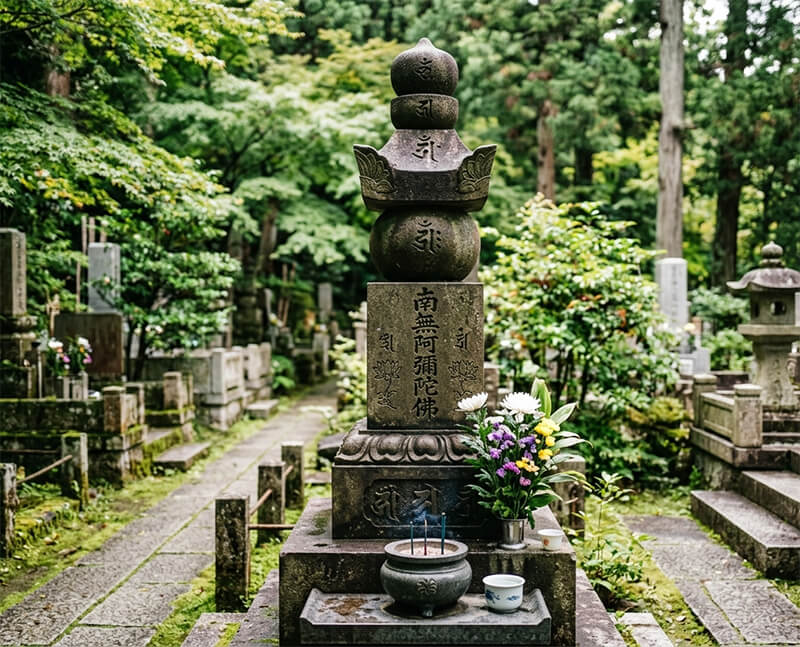
Buddhist funeral rites differ from one sect to another, yet all strive to assist the consciousness in bardo, the transitional state between death and rebirth. The major reason for the detailed rituals of Buddhist funerals is the belief that the consciousness remains for some time after the physical body is gone.
The Tibetan Book of the Dead calls this transition up to 49 days, during which the dead person’s consciousness experiences different visions. The monks performing the rites aim to lead the consciousness to a good rebirth or, better, to enlightenment.
From a thread on the net: Kenji’s Buddhist funeral in Kyoto was not at all like what I’d seen before. Along the seven days, monks regularly chanted sutras not only to console the family but especially to guide Kenji’s consciousness His widow said that Buddhism states that the mind remains conscious after death and it is capable of being confused and scared. The chanting is like a beacon, giving directions and reminding the consciousness of the Buddha’s teachings.
The BC (Buddhist Council) of NY (New York) research reveals that during the funeral period merit-making activities, contributions to temples, releasing animals–are considered to be ways of influencing the dead person’s karmic situation in a positive way, thus changing the feeling of helplessness into determined action.
Conclusion: Common Threads in Sacred Farewells
Although wonderfully different, funeral ceremonies in the major religions of the world still reveal first-rate similarities. Each of them understands and expresses the enormity of death by pledging not only divine homage but also a human collective response.
Christian resurrection hope, purification in Islam, Hindu liberation, or the Buddhist guiding of the dead through the bardo, these methods of coping with death carry out vital functions.
They formalize a means of dealing with the situation thereby turning death not only a distressing fact but a series of activities loaded with meaning. Through faith, they give supporters the strength to face demise and help the bereaved make sense of their loss. They nurture among the communities the consciousness that need not be borne by one person alone.
As we keep advancing in the worldwide integration of cultures, knowing about various funeral customs of different cultures helps us to stand beside our culturally diverse friends and neighbors in the hardest passage of their life.
The justification provided by the world’s religions for performing their specific funeral rites is, after all, a reflection of their core beliefs about the nature of a human being, what happens after death, and how the living should show respect to both life and death. By becoming acquainted with such rituals, we come face to face with the most genuine efforts of humanity to confront our own death with bravery, faith, and togetherness.
Read More:Funeral Knowledge