
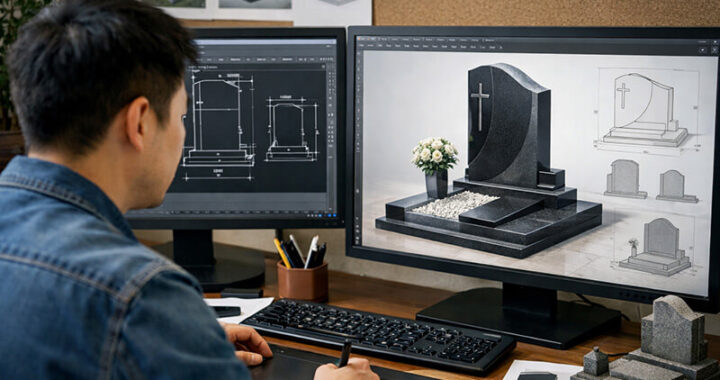
What Are the Latest Designs and Styles Available for Contemporary Headstones?
Exploring Modern Memorial Innovations Around the World
📖 Table of Contents
📖 Introduction
The world of memorial design has seen remarkable transformation over the past few decades. Contemporary headstones now mirror our shifting ideas about death, commemoration, and personal expression. The days when memorials were limited to rectangular granite slabs with standard inscriptions are now past. Today’s headstone, with its innovation, sustainability, and individuality, reflects ideas that would have been unfeasible just a generation ago.
According to ICCFA (International Cemetery, Cremation, and Funeral Association), about sixty-five percent (approx. 65%) of families today prefer custom memorial designs over traditional options. This shift represents a transformation not only in aesthetic consideration but towards a radical way of regarding the honoring and remembrance of our departed ones. Contemporary designs allow for unprecedented means to commemorate individual lives—from QR codes linking to digital memorials to living headstones made out of trees.
🎨 Minimalist and Modern Designs
Scandinavian countries revolutionized minimalist headstone design, allowing memorials to speak through simplicity. In Sweden, the Woodland Cemetery at Skogskyrkogården, Stockholm, is a testimony to how clean lines with natural integration could carry deep emotional value. Flat markers in local granite with minimal engraving (usually just the name of the deceased and the years of life) have become the choice of many Swedish families.
Japanese memorial design has had a great deal of impact on modern Western trends. The notion of marginal space in Japanese aesthetics, or that of “ma,” has influenced certain headstones wherein what is not said can be as meaningful as what is inscribed. Modern headstones found at Tokyo’s Aoyama Cemetery exemplify geometric precision often incorporating small water features or carefully chosen stones for contemplation.
In 2023, Australian designer Marcus Chen made waves in the memorial industry when he launched his “Horizon Series.” These headstones, featuring sleek asymmetrical designs in stainless steel and polished granite, challenge classical symmetry. Chen credits inspiration from watching sunsets over Sydney Harbor and sought to enshrine within memorial design that feeling of infinite possibility. His work has featured in the Australian Design Review (ADR) and inspired designers across the Asia Pacific (APAC) region.
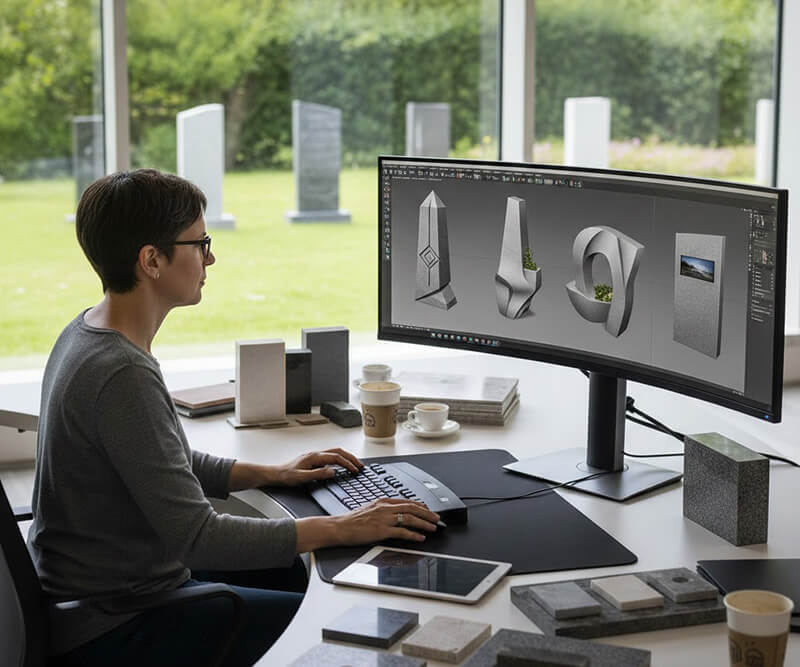
🌱 Eco-Friendly and Biodegradable Options
The sheer respect for the environment has considerably influenced memorial options all around the world. Leading the pack as far as green revolution is concerned are the living coffins and corresponding memorial markers from the Netherlands, these crafted from mycelium (fungal root structures). The biodegradable urns from Loop Biotech, a Dutch company, grow into trees, while small commemorative plaques made from compressed bamboo fiber completely decompose in about twenty years (approx. 20 yrs).
In New Zealand, referring to Māori communities respecting older traditions while blending modern ecologically attentive practices within their rituals, has produced memorial markers from native kauri wood and pounamu (greenstone). These materials resonate with the concept of tying the deceased to ancestral lands while keeping environmental impact low. Research from the University of Auckland suggests that seventy-three percent (73%) of families in New Zealand weigh environmental issues when choosing memorial options.
The memorial gardens of São Paulo, Brazil, demonstrate how living memorials can constitute a transformation of an entire cemetery landscape. Instead of headstones, the families planted native Brazilian trees with small brass plaques set into surrounding rocks. After operating for five years, the site is now a thriving urban forest with over 2,000 memorial trees, creating an area that celebrates life while honoring memory. Environmental scientist Dr. Carolina Ribeiro documented that these memorial gardens provide habitat for 47 bird species and greatly improve urban air quality.
💻 Technology-Enhanced Memorials
This country, South Korea, has developed into a world leader in memorialization with technology. At the Seoul Memorial Park, it is possible to make a memorial headstone with an attached QR code that opens up multimedia tributes—including photos, videos, and voice recordings—when scanned.This approach addresses practical challenges in a country with limited cemetery space. According to the Korean Funeral Culture Research Institute (KFCRI), about eighty-one percent (81%) of new memorials are digitized in metropolitan areas.
Sophisticated Singapore combined AR with classical memorials. One such place is the Choa Chu Kang Cemetery, where visitors can view 3D holographic images of the dead overlaid on their gravestones when they use their smartphones. This technology has been developed by MemoryVerse together with the Government of Singapore to build “a bridge between physical and digital remembrance,” according to CEO Jennifer Lim. Digital memorials preserve memories beyond the lifespan of physical markers, with data stored securely in the cloud.
Even though Estonia is already famous in the digital world, it has also initiated solar-powered memorial displays. Small electronic screens fixed on gravestones are energized by photovoltaic cells to rotate pictures along with messages. The Estonian Digital Heritage Foundation says that they can hold out long-term over fifteen years and require less maintenance, which makes them ideal for families that cannot visit grave sites often.
✨ Artistic and Sculptural Styles
Italian artisans still follow the centuries-old path of memorial artistry, modernizing the themes. The new definition of classical forms can be seen in Staglieno Cemetery, Genoa, with the work of modern sculptors. Sculptor Alessandro Bertini has a memorial series that depicts abstract human figures that seem to be dissolving into light—carved Carrara marble with technical precision. It is this artwork that has dazzled an entire generation of memorial artists across the Mediterranean countries.
What is more interesting about contemporary headstone design is how it will carry the tradition of Día de los Muertos into Mexico. The artist collective Los Memoriales has produced colorful mosaic memorials that sing with brightness and pattern in a joyous celebration of life. Their work in Guadalajara’s Panteón de Mezquitán has headstones covered with scenes from the life of the dead that are hand-painted on Talavera tiles. Instead, it turns the cemetery spaces into outdoor galleries, where memory can be honored through artistic celebration rather than somber reflection.
Celebrated around the world for her works which include the “story stones,” artist Sarah Blackwood from Canada has gone even one step further with memorials including bas-relief sculptures that tell narrative stories all through the surface of the headstone. One of the most touching examples made for a Toronto family is one that portrays the deceased’s journey throughout life—from childhood to parenthood—in one constructed scene winding around the entire monument. Such narrative memorials, from documentation by the Canadian Memorial Arts Association (CMAA), increase family visitation rates to approximately forty-five percent (45%) compared to traditional markers.
🪨 Innovative Materials
The volcanic landscapes of Iceland have challenged memorial designers to consider basalt in a new light. Columnar basalt headstones in Fossvogur Cemetery in Reykjavik are made from the very stuff that forms some of the most famous geological formations in Iceland. These natural hexagonal columns are minimally processed, and their dark color greatly contrasts the white of frequent snowfalls across Iceland. Geologist and Designer Björn Sigurdsson explains how basalt would outlast granite by thousands of years with hardly any maintenance.
With a sustainable alternative to traditional stone carving growing in popularity in India, EcoMemorials in Chennai has brought forth another set of options that are both affordable and environment-friendly. The composite material can be molded into designs with great finesse that are impossible with traditional stone-carving techniques, such as replicating temple architecture or very elaborate floral motifs. The materials were certified by the Indian Green Building Council for having a seventy-eight percent (78%) lower carbon footprint as compared to quarried granite.
Glass artists of the Czech Republic have pioneered fused-glass techniques for memorial design. Several striking examples of headstones with colorful glass panels that beam dazzling effects as sunlight streams through are found at the Olšany Cemetery in Prague. Master glassmaker Pavel Novák worked on specialized processes to ensure that these glass elements would survive the harsh winters of the Czech Republic while remaining bright in color; for his workshop, no degradation has been reported for these memorials after twelve years of outdoor exposure.
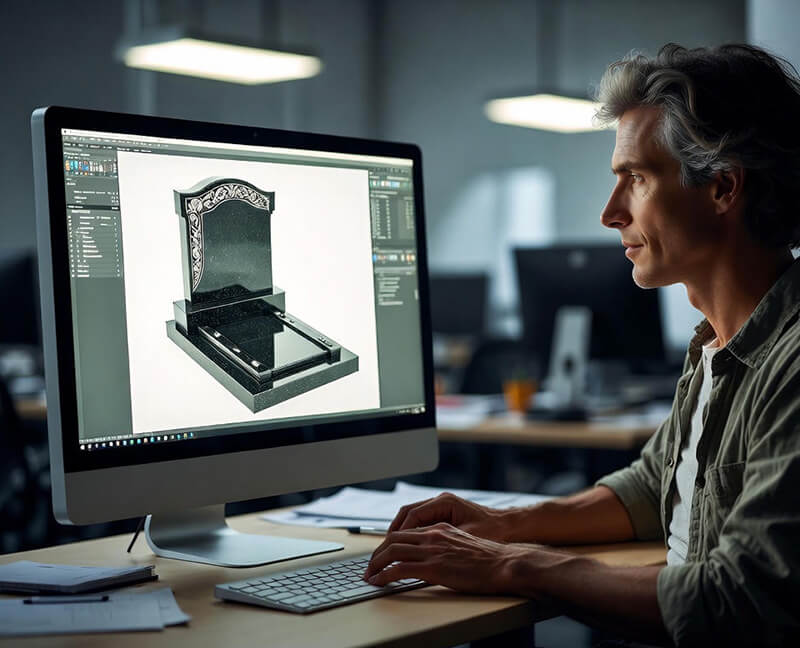
💝 Personalization Trends
Increasingly, families now demand memorials that express individual character rather than conform to a template. La Recoleta Cemetery in Buenos Aires has adopted this trend, while still maintaining a historical charm in favor of recent projects that include a memorial to a beloved tango dancer in carved dancing shoes and one to an eminent chef with relief sculptures of cooking implements. According to cemetery administrator Maria Gonzalez, personalized memorials strengthen the emotional ties, so that the cemetery becomes, in her words, “a museum of lives lived fully.”
Krakow workshops have perfected laser technology for etching pocket-photo quality pictures onto granite. This technology permits, for the families’ use, the setting of finely detailed photographic images of the deceased, the landscapes meaningful to him, or the scenes from the main moments of his life. Powązki Cemetery, Warsaw, has hundreds of memorials etched with this technology, some with upwards of twelve different images arranged into artistic compositions. Tech specs detail these etchings to remain sharp for fifty years when placed outdoors.
In Thailand, Buddhist remedies and modern personalization mix in an altogether other way. Memorials that incorporate small chambers for offering are preferred by many families, modern designs with weather-resistant compartments to hold flowers, incense, and photographs. Designer Somchai Prasert of Bangkok has introduced a set of modular memorials that allows families to modify such elements as memorial practices evolve from one generation to another. His designs are rooted in the understanding that remembering is never static but changes with family growth and as new generations form their own relationships to ancestral memory.
🎯 Conclusion
Contemporary concepts in headstone design have evolved with the times, taking into consideration the shift toward personalization, environmental concerns, and the applicability of technology. From the minimalist elegance of Sweden to digital innovations in South Korea, living memorials in Brazil, and artistic wonders in Italy, the memorials we see today offer unparalleled diversity from an artistic perspective. These designs, besides honoring individual lives, also consider cultural traditions and environmental concerns.
In the foreseeable future, memorial design will continue to evolve, responding to the demands of novel materials, technologies, and aesthetic approaches. What will remain constant, though, is the essentially human act of remembering, paying tribute, and making meaningful memorials to the very loved ones whose passing has been deeply felt. Contemporary headstones accomplish this through beauty and innovation and, more importantly, through an avenue of deeply personal expression, thus enabling memories to endure in forms as unique as the lives they celebrate.
Whether you are looking for minimalist elegance, eco-friendly options, technologically enhanced features, or artistic sculptures, today’s memorial space offers possibilities that would have seemed impossibly hard not long ago. The key is to find a design that truly captures the essence of your loved one and provides for a space of remembrance and reflection.
We Are Professional Headstone Manufacturers
For several decades, we have been dedicated to producing beautiful and lasting memorials that truly represent your loved ones. Our highly proficient artisans seamlessly merge traditional methods and modern applications to construct headstones of the greatest quality and artistry.
Contact us and let us discuss how we can help toward the development of a meaningful and personalized memorial.