
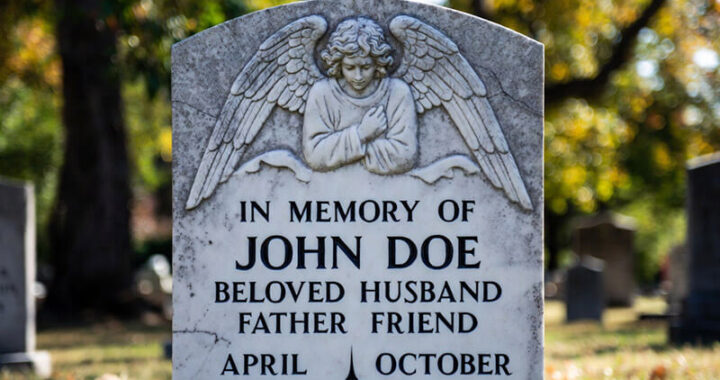
Who Puts the Death Date on a Tombstone?
A human look at grief, tradition, and the people behind the final inscription.
📋 Contents
Who Really Decides?
When a person dies, the bereaved family quietly faces one of their final decisions: who will authorize the inscription of the death date? who is going to inscribe the final date? Usually the person who has the closest familial relationship with the deceased (NOK) is the one who gives consent for the inscription. However, it turns out that deciding on the date of death involves far more individuals than you would imagine.
The death date information is taken from the official death certificate which the local civil authorities issue. Without this document, a memorial stone usually cannot legally display the date of death in many countries.
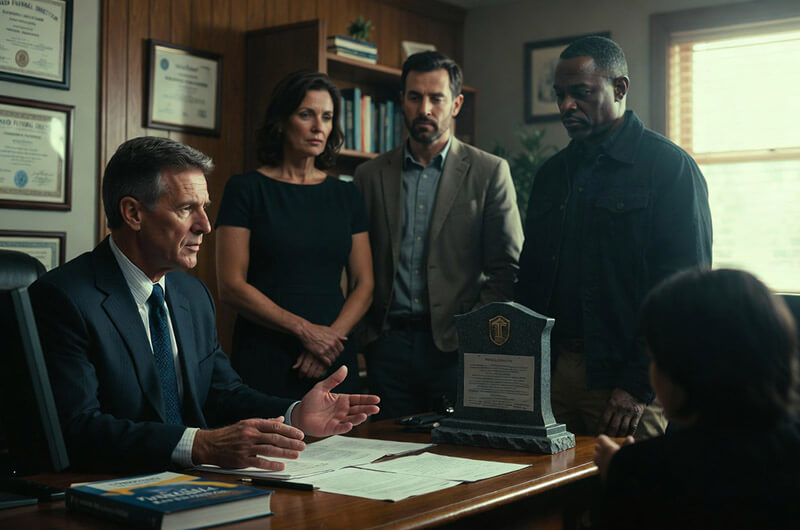
During bereavement, families endure a tremendous emotional burden but, simultaneously, they have the main say. They decide the text, the character style, and verify the dates. In Japan, for instance, families cooperate closely with a sekizai-ten (stone shop) to inscribe kanji characters which have a strong cultural significance.
— A mourning daughter in South Korea
In a lot of East Asian cultures, besides the family, they also call in a feng shui master or a Buddhist monk before they decide on the dates and the layout on the stone.
Funeral Directors & Stone Masons
The actual work is done by the funeral director and the monumental mason. Usually the funeral director gathers all the information from the bereaved family, cross-checks the data with the death certificate, and then sends the order for the engraving to a stone workshop.
The NAFD (UK) revealed that the average time between death and the installation of a headstone is 6–12 months, as the ground needs to settle before installing the permanent monument.
Stone masons, also known as memorial artists, work with a CNC machine or with the hand-chiseling method depending on the design. One mistake alone can force a mason to start over the entire granite slab.
Examples Around The World
Church of England regulations state that the parish churchyard vicar is the one who should give the final approval for any inscription. The family suggests, but the church decides.
Traditionally, the oldest son commissions the tombstone. The date is inscribed using both the lunar and the Gregorian calendars. Families with high net worth often bring a professional calligrapher onboard.
During the Day of the Dead, families may repaint or fix inscriptions. The local panteón (cemetery) administrator holds official records and verifies the dates.
Often the parish priest collaborates with a Christian family in Kerala about the tombstone. Hindu cremation rituals do not generally include tombstones, but memorial plaques can be found in some communities.
according to local Bestattungsgesetze (burial laws), all inscriptions must be truthful and approved by the Friedhofsamt (cemetery office). Errors must be rectified within 90 days or fines may be imposed.
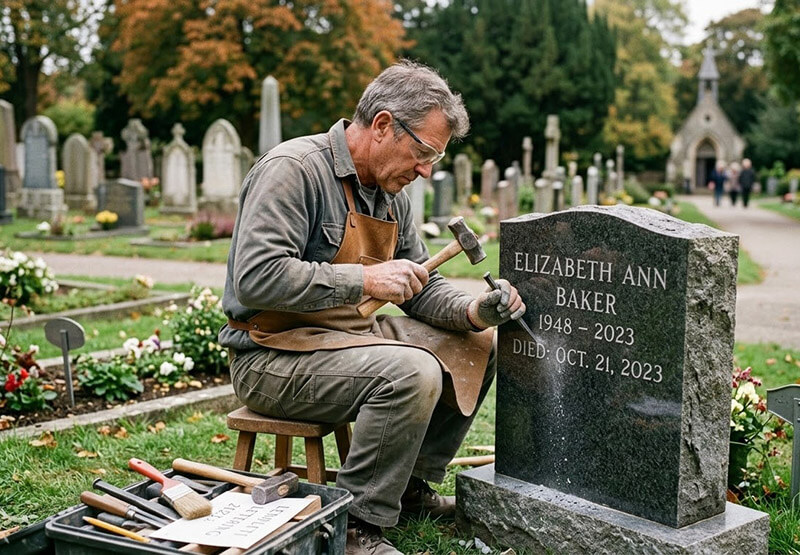
Pre-Planned Tombstones
Nowadays, more and more people are preparing their own memorials ahead of time. A larger percentage of individuals — mainly in the UK, Australia, and Scandinavia — are deciding on their tombstone, inscription, and even leaving the death date blank for many years.
According to a 2022 study by the Dying Matters Coalition (UK), more than 36% of adults aged 60+ had completed at least one funeral arrangement before death.
The tombstone maker just inserts the confirmed date once informed — a silent, lone, final task whereby the chapter that someone else wrote for themselves is quietly closed.
What Happens When There Are Errors?
In fact, errors on gravestones happen more frequently than the general public thinks. Incorrect dates, names spelled wrongly — these things do happen. In the Republic of Ireland, the management of national monuments including historic stones rests with the Office of Public Works, and correcting an old stone requires a formal application process.
When it comes to private graves, it is usually the family that bears the cost of correction. Certain tombstone makers might offer a warranty period. On a personal level, discovering a mistake can be deeply upsetting — that sensation of ‘losing’ someone all over again.
Legal & Official Records
The date of death carved on a tombstone is not a legal document, however, it must be consistent with the official death certificate recorded at the national civil registry. Within the EU, mismatches can cause difficulties in inheritance cases.
A tombstone commemorates a person privately. A death certificate is a public record of a person’s demise. They are both significant, but in different ways.