
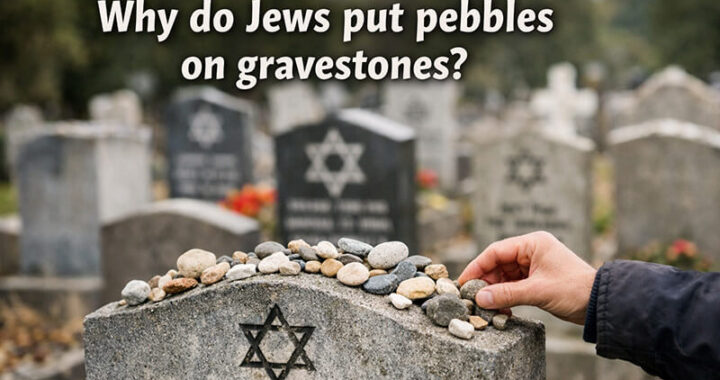
Why Do Jews Put Pebbles on Gravestones? Understanding a Sacred Tradition
Table of Contents
Tiny stones on graves might be familiar to those who have ever been to a Jewish cemetery. With deep and layered meanings embedded in Jewish tradition, this ancient practice has existed for thousands of years. These tiny stones endure far longer than flowers and represent something eternal — a tie between the living and the deceased, unlike flowers, which wither and die. The custom seems to have spread through Jewish communities all over the world-from the American cemeteries to those in Israel, Europe, and beyond.
Ancient Origins of Placing Stones
The ancient tradition of placing stones on graves dates back to when wandering Jews passed through desert-like regions. Archaeological finds of the Biblical age suggest that stones were being used as grave markers long before formal engraved headstones became common. Evidence exists in the Torah of stone heaps as grave marks, specifically with the account of Rachel’s grave, where Jacob stacked stones in memory of his beloved wife.
In ancient Middle Eastern tradition, travelers would pile stones over graves so they might not be disturbed by wild animals or weather. Cairns, the archaeological term for such stone mounds, would provide permanent markers in settings where wooden edifices would have quickly rotted away. Reports that extend far into the Common Era (CE) suggest that the use of cairns became a well-established custom among Jewish communities all across the Mediterranean.
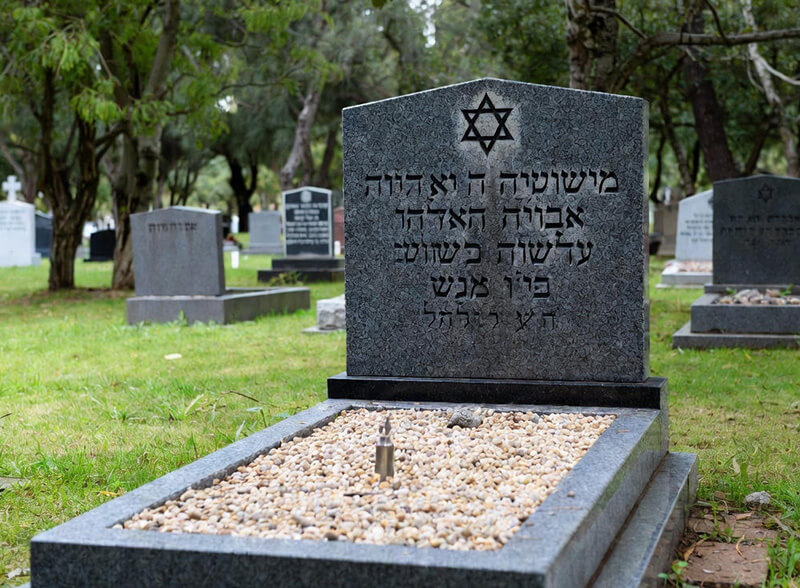
Symbolic Meanings Behind the Practice
Within Jewish philosophy and theology, the term stone has several forms of symbolism. Stones represent permanence and eternity in Jewish culture as opposed to flowers that are common at the graves of Christians. The Tanakh associates stones with continuance of memory and the immortality of the soul. For centuries rabbinic scholars have interpreted the act of placing stones as an act of corporeal remembrance, each saying, I was here, and I remember.
Cultural Insight:
According to Jewish mystical tradition, stones, particularly from the viewpoint of Kabbalah, embody sparks of divinity. Thus, placing a stone on the grave is a recognition of the divine spark inside the soul of the deceased.
According to the Talmud, honoring the dead and remembering them with acts of remembrance is termed ‘kavod ha-met’, a holy duty. Each stone then becomes a tangible prayer, a blessing that increases as time goes on. Others suggest that it is an expression of the good deeds and mitzvot the visitors performed in the name of the deceased.
Religious and Cultural Traditions
While the practice varies slightly among Jewish communities — Orthodox, Conservative, Reform, and Reconstructionist —the practice is slightly varied, stone-placing is largely accepted. In the Orthodox tradition, the visitors usually recite a prayer or psalm while placing the stones. This concept ties in with the notion of tikkun olam, which means that each act of remembrance contributes to some mending and healing in the world.
Both Sephardic and Ashkenazi Jewish communities accept this custom, albeit with regional variations. According to Jewish cultural organizations, a large majority of Jewish families worldwide continue to observe this custom, making it one of the most widely observed Jewish burial customs. Family members visit graves on important dates such as the yahrzeit (anniversary of death) specifically to place stones and recite the Kaddish prayer.
Practical Purposes Throughout History
The stone tradition had practical connotations throughout Jewish history in addition to its spiritual value. In deserts, flowers shriveled quickly and attracted insects, whereas stones remained durable markers without requiring maintenance or suffering decay. They provided a dignified way of marking and honoring graves during persecutions when Jewish communities could not afford expensive monuments.
Historical records of medieval Europe showed that stone-placing aided families to identify graves at times when Jewish cemeteries had suffered desecrations or destruction. Each stone would represent a visit, forming a visible and cumulative record of remembrance. Especially during the Holocaust, this was true, as places of Jewish memory throughout Europe were topped with stones by survivors.
Important Note:
In present times, at Holocaust memorial sites around the world like Yad Vashem of Israel, millions of stones will blanket those monuments, thus creating monuments that, in themselves, powerfully proclaim collective memory, as well as ongoing remembrance.
New Definitions and Practices
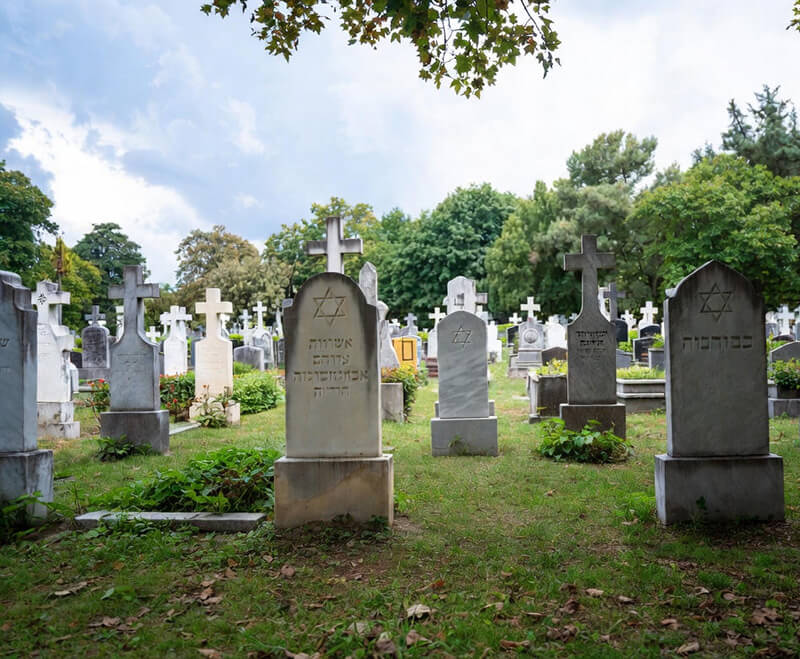
Contemporary scholars and rabbis of Judaism are putting meaning into this ancient custom. The stone, like so many other things, has different connotations for different people: the permanence of the soul in contrast to the temporary nature of physical life. Families can then some families may choose specially selected stones, though traditional practice generally avoids engraving or decoration. before placing them, personalizing the tradition while honoring its essence.
Most of the time, you’d find many beautiful stone-heaps that had gathered themselves over the years, sometimes covering an entire monument. These accumulations speak volumes of love, remembrance, and eternal connection. Cemetery records mostly report that graves of beloved rabbis, community leaders, and tzaddikim bear thousands of stones placed by them, all by visitors seeking blessings and searching for spiritual connections.
How to participate properly
As daunting and complicated as it sounds, it is really quite simple. Pick a small, natural stone, mostly just something from nature, nothing fancy or painted unless that is the tradition of the family. It doesn’t have to be big, in fact, even the tiniest pebble carries with it all the weight of remembrance and honor. Gently place it atop the headstone or monument and take time to reflect or pray.
If one is not of the Jewish faith, they may still take part in this tradition while visiting Jewish cemeteries in respect, but it would be prudent to understand what it means to their faith before doing so. Not bound to any religion, the act finds resonance on common themes of memory, love, and the human need to honor those who went before us. No matter whom the stone honors-a family member, a historic figure, or just a memorial-the act connects the living to the deceased and to the age-old tradition connecting generations of Jews all over the world.
We Are Professional Monument Manufacturers
Being a direct stone processing and wholesale factory, we manufacture high standard granite and marble memorials, suiting diverse cultural and religious traditions. With extensive years in business, we supply quality memorial products to monument dealers worldwide, funeral homes, and cemetery professionals. Contact us for wholesale inquiries and bulk orders.