
Quick Summary
Funeral service work isn’t just a job. It helps families during painful moments, protects dignity, and keeps memories alive. This article explains why many people see this profession as a sacred honor, supported by real examples and facts.
Table of Contents
A Job That Is More Than a Job
People often assume that working in funeral services is all about holding events or looking after cemeteries. However, for those working in this field, it is usually much more impactful. Those who organize funeral services are not merely scheduling events, but they are also helping people cope with the tragedy of death.
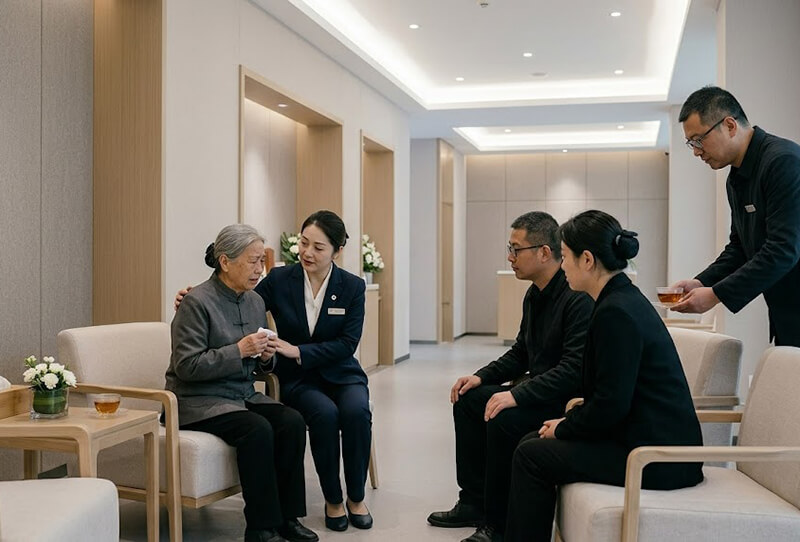
After the death of a relative, people who are grieving are generally very emotional and at the same time disoriented and physically and mentally drained. The professionals working in the funeral industry are thus crucial in bringing calm and order in the midst of chaos. They will guide the family in filling out the necessary documents, conducting the ceremonies, and even making sure that the things that are done are in keeping with the dignity of the deceased.
It is for this reason that a lot of workers claim that the job of a funeral director is a vocation based on the desire to serve rather than a mere career. While working in this capacity may not be a walk in the park every time, it is still highly rewarding.
Help Families Get Through Their Grief
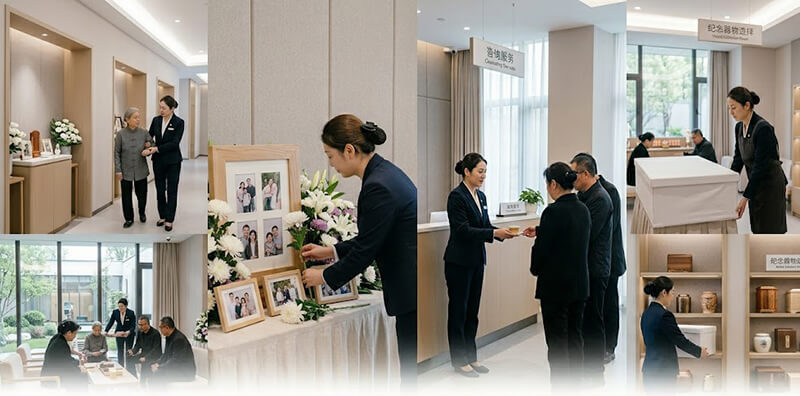
Funeral service workers frequently end up being someone families can turn to when they’re deep in sorrow. Sometimes they’re the only familiar, steady, and friendly voice a family can hear throughout the entire day. These are the people who work late, respond to 12 a.m. calls, and assist families in resolving their complicated problems.
All little things count as well. A memorial photo done with great care, clean and fresh flowers, or a simple chat can bring some ease. These may be just tiny moments but they stay in people’s memory for a pretty long time.
A Real-Life Example
Michael, a funeral director in Canada, was assisting a family whose son had died unexpectedly. The devastated parents were unable to begin planning. Michael discreetly took care of almost everything, and even set up a gorgeous memorial table with the child’s favorite toy cars.
The family kept coming to the funeral home on each anniversary long after the event and kept thanking him. They acknowledged that his compassion had not removed their sorrow but it had given them a starting point for their healing.
Instances like this one are not unusual and in fact, they take place daily in funeral homes throughout the world.
Facts and Evidence
According to the National Funeral Directors Association, carrying out meaningful funeral ceremonies helps people cope with their sorrow more efficiently. Emotional recovery after a loss is also said to be facilitated by rituals and memorial meetings, according to research.
Also, funeral workers are known to work extremely long hours. Many of them are on-call 24/7, including weekends and holidays. However, despite the difficulties, a lot of them continue being in the profession because they believe they are changing people’s lives.
This dedication is one of the reasons why this profession is generally respected by society.
Preserving Human Dignity
Everyone at the end of life deserves to be treated with respect. In fact, funeral workers play a big role in protecting human dignity. They can provide a simple cremation or organize a grand ceremony. It is their responsibility to make sure people are treated with the utmost care and tenderness.
Moreover, funeral workers play a significant role in preserving cultures and religions. Each community has its own unique way to say farewell, and the funeral staff stand as the pillars that keep those traditions running.
The work is not just unglamorous, it can also be emotionally exhausting. Nevertheless, many workers wouldn’t trade it for anything else because they are aware of the true value of their work.
Conclusion
Working in funeral services is seen as a special privilege because it is centered around empathy, dignity, and establishing human relationships. These specialists guide people through the hardest moments, which are experiences that most of us will remember forever.
With a great number of job positions these days being temporary and transactional, funeral service is one of the very few occupations that continue to be fundamentally human. It is this, frankly, that makes it beautiful.