
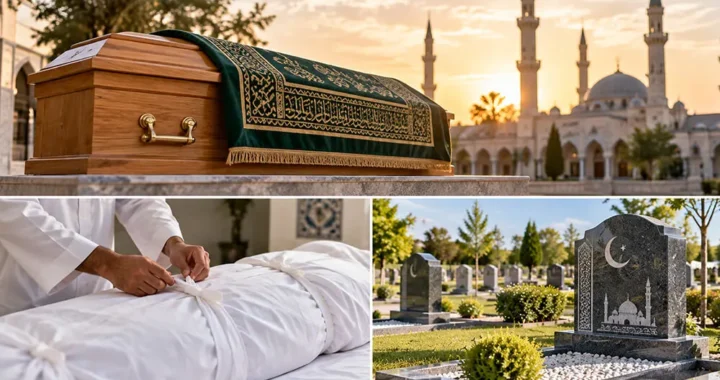
Is a Coffin Haram in Islam?
A common question we hear from Muslim families is: Is using a coffin haram in Islam?
The simple answer is: a coffin is not automatically haram.
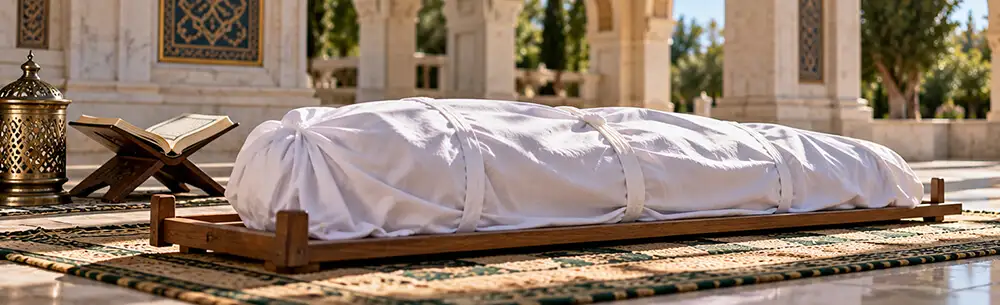
In traditional Islamic burial, the deceased is washed, wrapped in a simple white shroud called a kafan, and buried as soon as possible. Many Muslims prefer the body to be placed directly into the earth when local rules allow it.
But using a coffin can be acceptable when there is a good reason.
What Is the Traditional Islamic Burial?
Islam encourages a simple funeral.
After death, the body is washed, wrapped in a shroud, and the Janazah prayer is performed. The burial normally takes place without unnecessary delay.
The Muslim Burial Council in the UK explains that shrouding is part of the traditonal Islamic funeral process and that burial should take place quickly where possible.
This simple style of burial reflects equality. Rich or poor, people return to Allah (SWT) in a similar way.
For many familes, this simplicity is very important.
So Why Are Coffins Sometimes Used?
The answer is usually local law, cemetery rules, safety, or the condition of the grave.
In some places, a cemetery may require a coffin. For example, some UK cemeteries allow Muslim graves but still require the deceased to be buried in a coffin or casket. Other councils permit burial in only a shroud.
This means the rules can be diffrent from one cemetery to another.
A coffin may also be needed when transporting the deceased, when the ground is unstable, or because of public health requirments.
For ex., one family may want a shroud-only burial. Their funeral director checks the local cemetry and finds that the body can be transported in a coffin, then removed from it at the graveside.
Another family may live in an area where the coffin must remain in the grave.
Neither family is trying to ignore Islam. They are working within local rules.
Does Using a Coffin Make the Funeral Un-Islamic?
Not necessarily.
Many Islamic scholars distinguish between using a coffin without need and using one because it is required or necessary.
The intention also matters.
A simple wooden coffin used for safety or legal reasons is very different from choosing an expensive coffin only to show wealth.
Islamic funerals usually focus on modesty, dignity, and respect for the deceased.
If you are unsure, speak with your local imam or Muslim funeral director before making the final arrangment.
They will know both Islamic practice and local cemetery rules.
Check the Cemetery Before Ordering
This is also important when choosing a grave or memorial.
Ask the funeral home or cemetery these questions ASAP:
Does the cemetery allow shroud burial?
Is a coffin required?
Which direction will the grave face?
Are there rules about the headstone?
What ID or documents are needed?
Some Muslim sections are designed so the deceased can face the Qibla. Local rules may also control the size of the grave and memorial.
A local GP, funeral director, imam, or cemetery office can help with the practicle steps.
What About the Headstone?
Muslim memorials are often simple.
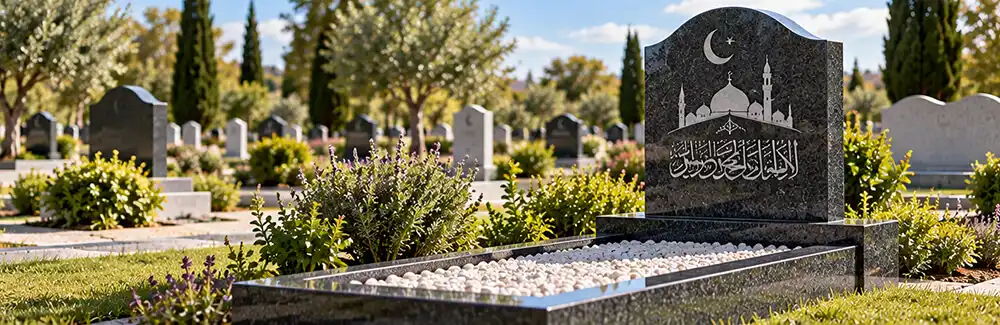
Some familes choose only a small grave marker. Others choose a granite headstone with the person’s name, dates, and a short Islamic inscription.
The style depends on the family, local comunity, cemetery rules, and religious guidance.
There is no need to make the memorial large or expensive.
Final Answer
So, is a coffin haram in Islam?
No, not in every situation.
A shroud-only burial is closer to traditional Islamic practice when it is possible. But if a coffin is required by law, cemetery policy, transport rules, or another real need, families should not immediatly assume they are doing something wrong.
The best approach is simple: check the local rules, speak with a trusted imam, and make sure the deceased is treated in a respectfull and dignified way.
Islamic burial is not about showing wealth. It is about dignity, prayer, simplicity, and returning a loved one to Allah with care.