
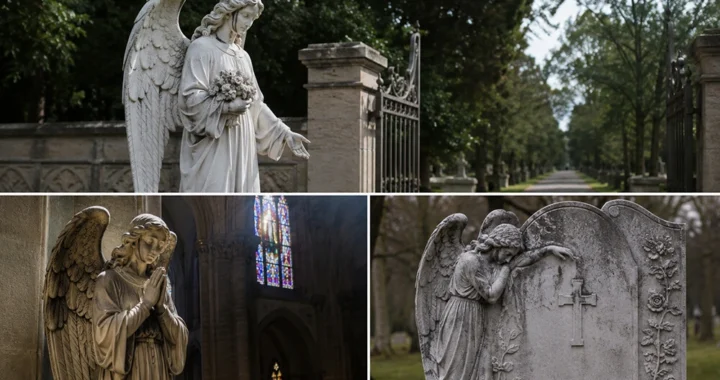
Where to Put an Angel Statue?
Choosing where to put an angel statue is not only a decorating decision. For many people, an angel represents someone they miss, a difficult period they survived, or the hope that their family is being watched over.
A statue may look beautifull in the centre of a garden, but the most meaningful place could be beside a favourite chair, under a tree planted by a parent, or near the entrance of a family home. Before moving the statue, ask yourself one question: “What do I want to feel when I see it?”
The answer may be peace, comfort, protecton, remembrance, or welcome.
Place It Near the Garden Entrance
An angel near a garden gate can create a gentle and welcoming first impression. Visitors notice it before they see the rest of the enviroment, so it can quietly set the mood of the space.
The statue shouldn’t block the walkway. Leave approx. 60 cm around the base so people can pass without touching the wings. This is important when children, older visitors, or people carrying gardening tools use the path.
A family in Surrey, England, placed a small angel beside the gate after losing their grandmother. She had welcomed relatives at that same entrance for more than 40 yrs. The statue did not replace her, but it became a quiet reminder of the way she greeted people.
For safety, use a level stone or concrete base. Even a statue weighing 30 kg can lean when soft soil becomes wet.
Create a Quiet Memorial Corner
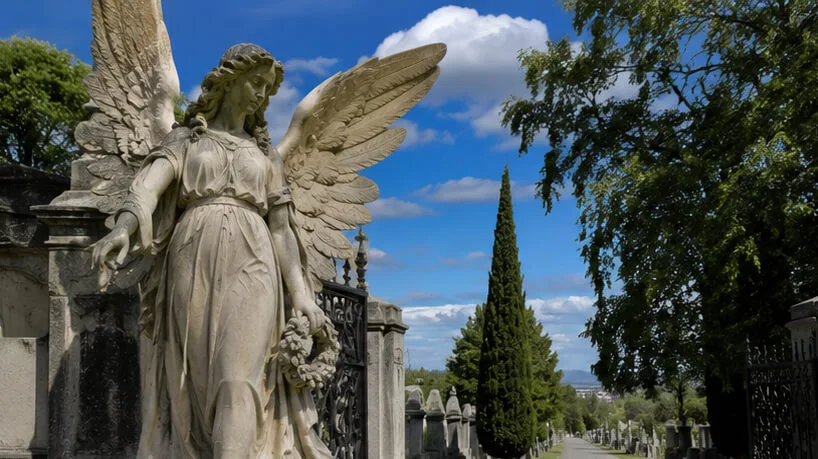
A private corner is often the best place for an angel connected to memmory and grief. It may sit beside a bench, flowering plants, a small fountain, or a tree associated with someone important.
Choose a place where you can sit for 10 or 15 minutes without feeling exposed. Grief is personal, and not everyone wants a memorial to become the main feature of the garden.
In Kyoto, Japan, one homeowner placed a modest stone angel near a maple tree planted after her sister’s death. The statue was partly hidden from the house. She said this gave her a seperate place to pause without turning the whole garden into a memorial.
The emotional value of the location often matters more than perfect visual balence.
Put the Statue Beside a Pond or Fountain
Water and angel statues work well together because both can create a feeling of calm. Moving water also softens nearby traffic noise and makes a small garden feel more private.
However, don’t place the statue directly in constantly wet soil. Water can collect under the base, encourage staining, and increase the risk of movement during cold weather. A layer of compacted gravel under a stone slab improves drainage.
In northern parts of the UK and Europe, water trapped in cracks may freeze and expand. Over many freeze-and-thaw cycles, this can damage weak stone or poor-quality concrete. A proper base is more important than a simple DIY arrangement made from loose bricks.
Keep electrical fountain cables away from the statue’s footing, etc., and make sure the figure remains visable from the seating area.
Use an Angel as a Garden Focal Point
A larger statue can stand at the end of a path, in the centre of a lawn, or against a tall hedge. This is a more formal and traditonal placement.
The human eye naturally follows paths and open sight lines. Placing the angel where a path ends gives visitors a clear destination. A hedge, wall, or group of dark green plants behind a pale statue also creates contrast.
For e.g., a garden owner in Tuscany, Italy, placed a marble angel at the end of a narrow cypress-lined path. The design worked because the statue was not surrounded by many competing objects.
Large angel statues need more open space than small ones. Compare the statue’s height vs. nearby plants, walls, and furniture before fixing it permanently.
Place It Near the Front Door
A small angel beside the front door can represent welcome and protection. It works well on a porch, entrance step, or shelf where it can be seen quietely by family members arriving home.
Avoid placing it where bags, doors, bicycles, or deliveries may knock it over. A wall-mounted angel may be safer in a narrow entrance.
Outdoor statues near a doorway also receive less rain than statues in an open garden. Even so, sunlight can fade painted details. A UV-resistant outdoor sealer may help, although the correct product depends on whether the statue is made from granite, marble, concrete, resin, or metal.
Check the statue every few months rather than waiting for major maintainance problems.
Add an Angel to a Cemetery Memorial
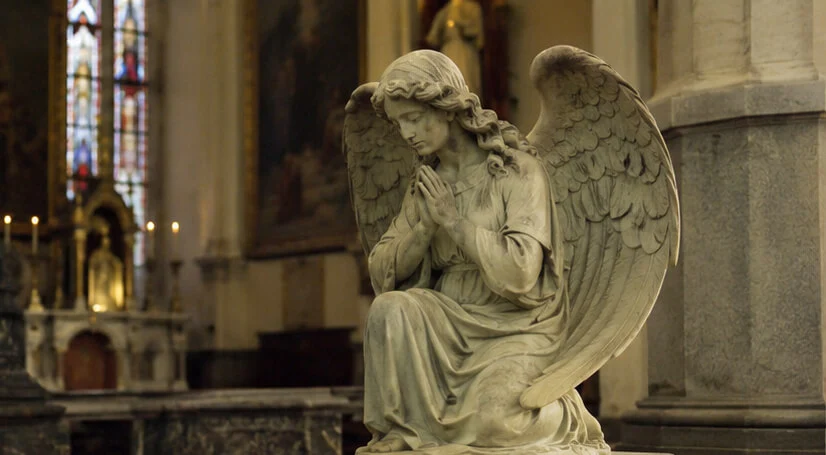
An angel can be placed beside a headstone, on top of a monument, or as part of the memorial itself. Before ordering or installing one, contact the cemetery.
Cemeteries often have rules about height, foundation size, materials, flower areas, and additional ornaments. Some permit small figures but do not allow loose decorations because grounds workers need to mow safely.
A neigbour in Melbourne, Australia, wanted to add an angel beside her father’s grave. The cemetery allowed it only after the figure was attached to the existing granite base. Asking first prevented extra costs and avoided the risk of removal.
Installation may take only a few hrs., but approval can take longer.
Choose the Place That Feels Personal
There is no single correct location for an angel statue. The best place is stable, safe, easy to see, and emotionally meaningful.
Walk through the garden at different times of day. Notice the sunlight, shadows, wet areas, and views from the windows. You may discover that the most powerful location is not the most obvious one.
An angel statue does not need to dominate a space. Sometimes, its greatest value comes from waiting quietly in a corner, ready to be noticed when someone needs comfort.